Showing posts with label Road Lessons. Show all posts

Sunday, February 20, 2011

The Car is Moving Under Road?

This Volkswagen didn’t get underwater, it got under road, as such thing can happen only in post Soviet space, this time in Ukraine. The people had to escape through the baggage door as it was the only part of the car not under the road.


Source: English Russia

Monday, January 24, 2011

Difference between Crash Scene and Crash Site

Today I found out the difference between the term "crash scene" and "crash site". For normal people, "heck, why should I know those things". I hope I'm just a normal person. However, during a road crash inquiry report write-up, I cannot easily neglected such important thing. Thanks to Mr. Zulhilmi from MIROS Publication Unit for highlighting this to me. I'm such a forgetful person, so hopefully by putting this new info at my blog, thus can remind me when I need it.

Working at the crash site, not the crash scene. True? But the "smell" was still there...

A crash SITE: a place where an accident had occurred. At a crash SITE, the wrecked vehicles, the dead and the injured have been removed.

A crash SCENE: a place where an accident had occurred whereby the dead, the injured and the wreck have not been removed yet.

Monday, November 29, 2010

Why Do Freeways Come to a Stop?

It happens to most drivers at least a few times a year. You are sailing along on the highway or expressway or freeway when you are suddenly forced to come to a stop, or at least a crawl. You can't see why things are slowing around the bend. And when you get there, traffic is moving better. Check this out to learn why and what is the term for that occasion.

Click to Enlarge :O

So what do u think of the "shockwave" and the funnel effect? New terms huh? Please don't feel bad because you are not the only one who not know about this :)

Monday, May 3, 2010

What are the Causes of Road Accidents?

1. Some people might wondering, "what are the causes of road accidents?". To answer this, we must distinguish the definition between high profile accidents (involving death (s)), and just regular road accident (slight injury or none at all). Based on statistics, almost 80% accidents reported are not involving any death. This number could be thousands cases in a year, depending size of countries and the population.

2. Why people reporting regular road accident even they do not get any injuries? Yes, the answer is insurance claiming. While I'm not trying to scare you, but there are "trolls" out there who really want to create accidents case (they don't care whether you will be alive or not) so that they can make income from other misfortune (towing truck, etc...). How they do it? See infographic below and then you will get some ideas. I personally know that this is happening at Jalan Kuching. So be careful.

Click to Enlarge :O


Source: Auto Insurance

Wednesday, March 31, 2010

How to Solve Road Traffic Problem?

1. Have you ever wondered on how to solve road traffic problem in the city? I think the problem is not only occurred at Malaysia, but also the rest of the world. Following is the creative photo that showed us literally on how to make our city more spacious.

2. Are you agree or not on this type of method? Bus is the best answer I guess. Bicycle could be the answer but definitely not a horde of cars. :)

Source: Natasha Llyod Flickr

Saturday, March 20, 2010

Sunday Special: 4 Funny Road Signs

1. Sunday special is coming again with additional two photos that will break your laugh. Hope these photos can enlighten your day before going through 5 tough working days starting Monday...

Emergency Phone - 174 KM Ahead! Oh...

Drive Slow See Our Village...Drive Fast See Our Judge...Speed Limits Strictly Enforced...Great Notification!

Do Not Gossip, Let Him Drive...I cannot Agree More with this statement..hehehe...

Accidents Are Prohibited on This Road. What?

Images Credit: Elistmania

Sunday, March 14, 2010

Creative Air Cones For Road Safety

1. Road Cones can be a pain sometimes, for the driver a safety hazard and for the guy who has to place them on the road, a back breaking job. Not many must have thought of redesigning this thing, but innovation is really called for. Interim let’s look at the Air Cone Concept; it’s this flattened balloon strip that you lay on the road. Inflating it causes Air Cones to pop up, but care has been taken to ensure a sturdy design. Only hope that crazy kids with pins in hand don’t got popping it just for fun. :)

2. In my opinion, beside being helpful on the traffic management on the highways, these creative air cones are also suitable to be used in the city. For example, special lane that only opened during morning peak hours from Grand Saga Cheras to Kuala Lumpur. Those who are frequently using that stretch will know what I mean.

Designers: Hoyoung Lee, Youngwoo Park & Junkyo Lee


Credit: Yanko Design

Thursday, February 4, 2010

Datuk Hazam JSJK Died in Road Accident

1. From the pictures shown by Ondscene (pictures below), I think the main cause of the accident could be speeding. Then, for some reason the car lost control and spun (could be because of wet road surface, however this fact must be further verified).

2. During the car's spinning, the deceased victim could be thrown out onto the road and that could be the cause of his death (if seated at the back). If seated at the front, he could be trapped by the crumpled zone of the car (see photo 1). In the meantime, the car hit the trailer on lateral side but not underride. The driver of the car was severely injured by the impact (because of deformation on front car area - left side is more severe).

3. This is only my rough idea on how the accident occurred. Could be wrong though. Further information are needed for perfect reconstruction of the crash.

4. I have seen many severe crashes happened due to collision with trailers parked on the emergency lane. Authorities and PLUS must take some counter measure to solve the problem or else.....more casualties will happen in the future. Anyway, takziah to the family. Innalillah.


KUALA LUMPUR: Federal Commercial Crime Investigation Department principal assistant director (Investigation II) Datuk Mohd Hazam Abdul Halim, died in a road accident at KM 419.7 of the North-South Expressway near Bukit Tagar Interchange at 12.45am yesterday.

Mohd Hazam, 50, was in a chauffeur-driven Bukit Aman Proton Perdana V6 travelling on from Ipoh to Kuala Lumpur when the vehicle hit the back of a stalled lorry parked at the emergency lane.

Mohd Hazam died on the spot and his body was taken to the Kuala Kubu Baru Hospital, while the lans corporal driving the vehicle was seriously injured and warded at Sungai Buloh Hospital.

He had earlier attended a Commercial Crime Investigation Department conference in Ipoh. Mohd Hazam body will be taken to his home in Taman Tuanku Jaafar in Seremban and buried at nearby Muslim cemetery there after dzuhur prayers. He is survived by wife Datin Siti Norziah Abdullah, 41 and six children.


News Resource: NST Online
Pictures Resource: Ondscene Blogspot

Saturday, January 30, 2010

Chinese Man Throws Bicycle at Thieves

1. Snatching or ‘ragut’ is a unforgiving crime, which most of the time, the occurrence involves severe casualties to the victims. Since the incident occur on the road, I think this is part of road safety too. Am I right?

2. The videos, which entitled, "Chinese Man Throws Bicycle at Thieves on Scooter", show how a heroic China man arrested the snatchers by only using his bike. In my opinion, this noble action is commendable and worth emulating.


Resource: Melayu Kini

Monday, January 18, 2010

Killer Water Ponding on the Road

1. Malaysia is located a few degrees north of the Equator and is one of the South East Asia nations. The climate is of equatorial type in which the temperature is quite uniform throughout the year with frequent downpour occurrence. However, during the heavy downpour season, the roads are wet and water pounding can be found everywhere ranging from the expressway to the state road.

2. It is recommended to be more careful during the rainy season which usually occurs from June to December. While many of Malaysians are being careful with the roads during the season, a bizarre incident was happening somewhere far from the country. Pretty funny occurrence but laughing to other misfortune is not what has been taught in Islam. Let us take the lesson and be careful driving on such road.


Images Resource: Putihtih

Tuesday, September 8, 2009

Treasure Hunt Crash

1. I had written a post entitled "Janitor on road is indeed a Hazard" that might relate to my current post today. Road janitor is undeniably among the most dangerous and risky job in Malaysia. While they are usually not practicing proper safety protection, they are working recklessly on the side of the road. My fear has become true. Below is the story that emailed to me.

2. The accident was occured in 2006 at Melaka near Malim exit. A speeding treasure hunt car (Proton Wira) hit a road worker that was doing some painting work on the fence divider. Then the car lost control and hit another car (Proton Iswara) from the opposite direction. The road worker died on the spot. Poor guy. It is not like his 100% mistake though. Sigh.


Images Resource: Jurugambar.com

Wednesday, August 26, 2009

Trooper Turns Turtle

Isuzu Turtle1. I was stuck in the traffic jam on the Seremban - Kuala Lumpur PLUS highway few months ago. Can you guess the reason for the traffic jam is?

2. It was a 4WD turned turtle at the side of the road. I repeat it once again, AT THE SIDE OF THE ROAD. So, why the heck the highway traffic becomes very slow in motion? Supposedly, there will not be any problem since it happened at the side of the road. That is Malaysian - love to see, few to help.

3. By the way, please don't drive too fast on the wet road. This accident happened during a heavy downpour.

Trooper Roll
4WD Accident
Isuzu Trooper

Monday, August 3, 2009

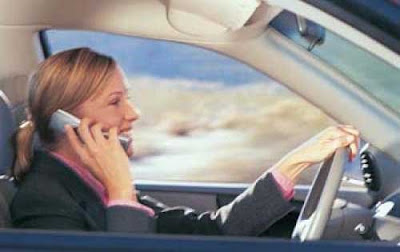
Cellphone Use and Driving Distraction by VTTI

Cellphone Driving
1. Several large-scale, naturalistic driving studies (using sophisticated cameras and instrumentation in participants’ personal vehicles conducted by the Virginia Tech Transportation Institute VTTI), provide a clear picture of driver distraction and cell phone use under real-world driving conditions. Combined, these studies continuously observed drivers for more than 6 million miles of driving. A snapshot of risk estimates from these studies is shown in the table below.


2. “Given recent catastrophic crash events and disturbing trends, there is an alarming amount of misinformation and confusion regarding cell phone and texting use while behind the wheel of a vhicle. The findings from our research at VTTI can help begin to clear up these misconceptions as it is based on real-world driving data. We conduct transportation safety research in an effort to equip the public with information that can save lives,” says Dr. Tom Dingus, director of the Virginia Tech Transportation Institute.

3. In VTTI’s studies that included light vehicle drivers and truck drivers, manual manipulation of phones such as dialing and texting of the cell phone lead to a substantialincrease in the risk of being involved in a safety‐critical event (e.g., crash or near crash). However, talking or listening increased risk much less for light vehicles and not at all for trucks. Text messaging on a cell phone was associated with the highest risk of all cell phone related tasks.

Explanation of Findings

4. Eye glance analyses were conducted to assess where drivers were looking while involved in a safety‐critical event and performing cell phone tasks. The tasks that draw the driver’s eyes away from the forward roadway were those with the highest risk.

5. Several recent high visibility trucking and transit crashes have been directly linked to texting from a cell phone. VTTI’s research showed that text messaging, which had the highest risk of over 20 times worse than driving while not using a phone, also had the longest duration of eyes off road time (4.6 s over a 6‐s interval). This equates to a driver traveling the length of a football field at 55 mph without looking at the roadway. Talking/listening to a cell phone allowed drivers to maintain eyes on the road and were not associated with an increased safety risk tonearly the same degree.

6. Recent results from other researchers using driving simulators suggest that talking and listening is as dangerous as visually dstracting cell phone tasks. The results from VTTI’s naturalistic driving studies clearly indicate that this is not the case. For example, talking and listening to a cell phone is not nearly as risky as driving while drunk at the legal limit of alcohol. Recent comparisons made in the literature greatly exaggerate the cell phone risk relative to the very serious effects of alcool use, which increases the risk of a fatal crash approximately seven times that of sober driving. Using simple fatal crash and phone use statistics, if talking on cell phones was as risky as driving while drunk, the number of fatal crashes would have increased roughly 50% in the last decade instead of remaining largely unchanged.

7. These results show conclusively that a real key to significantly improving safety is keeping your eyes on the road. In contrast, “cognitively intense” tasks (e.g., emotional conversations, “books‐on‐tape”, etc.) can have a measurable effect in the laboratory, but the actual driving risks are much lower in comparison.

8. VTTI’s Recommendations (Based on Findings from Research Studies)

• Driving is a visual task and non‐driving activities that draw the driver’s eyes away from the roadway, such as texting and dialing, should always be avoided.

• Texting should be banned in moving vehicles for all drivers. As shown in the table, this cell phone task has the potential to create a true crash epidemic if texting‐type tasks continue to grow in popularity and the generation of frequent text messagesenders reach driving age in large number.

• “Headset” cell phone use is not substantially safer than “hand‐held” use because the primary risk is associated with both tasks is answering, dialing, and other tasks that require your eyes to be off the road. In contrast, “true hands-free” phone use, such as voice activated systems, are less risky if they are designed well enough so the driver does not have to take their eyes off the road often or for long eriods.

• All cell phone use should be banned for newly licensed teen drivers. Our research has shown that teens tend to engage in cell phone tasks much more frequently, and in much more risky situations, than adults. Thus, our studies indicate that teens are four times more likely to get into a related crash or near crash event than their adultconterparts.

The Disconnect Between Naturalistic and Simulator Research

9. It is important to keep in mind that a driving simulator is not actual driving. Driving simulators engage participants in tracking tasks in a laboratory. As such, researchers that conduct simulator studies must be cautious when suggesting that conclusions based on simulator studies are aplicable to actual driving. With the introduction of naturalistic driving studies that record drivers (through continuous video and kinematic sensors) in actual driving situations, we now have a scientific method to study driver behavior in real‐world driving conditions in the presence of real-world daily pressures. As such, if the point of transportation safety research is to understand driver behavior in the real‐world (e.g., increase crash risk due to cell phone use), and when conflicting findings occur between naturalistic studies and simulator studies, findings from the real‐world, and not the simulator‐world, must be considered the gold standard.

10. It is also critical to note that some results of recent naturalistic driving studies, including those highlighted here as well as others (e.g., Sayer, Devonshire and Flanagan, 2007) are at odds with results obtained from simulator studies. Future researchis necessary to explore the reasons why simulator studies sometimes do not reflect studies conducted in actua driving conditions (i.e., the full context of the driving environment). It may be, as Sayer, Devonshire and Flanagan (2007) note, that controlled investigations cannot account for driver choice behavior and risk perception as it actually occurs in real‐world driving. If this assessment is accurate, the generalizability of simulator findings, at least in some cases, may be greatly limited outside of the simulated environment.

Resource

Sunday, June 28, 2009

Monday, April 27, 2009

India Road Traffic Signs Jokes

1. Somebody emailed me these road signs pictures that can be found in India. They are funny but the words are true. Please take lessons from these signages. "Don't dream, otherwise you will scream". Meaning don't sleep while driving!

2. Be Gentle on my Curves. Well, no comment hehe.

3. Drive like Hell and you'll be there. Indeed, don't be the cause of other's people misery.

4. This is highway, not a runway. Exactly.

5. Accident begins where alertness ends. Very true.

6. Hospital ceiling are boring to look at avoid accident. Weird sentence but I know you guys got what it means right?

7. Be slower on the earth than quicker to eternity. Haha.

8. Mind your brakes or break your mind. Please check your car regularly.

9. Live for your today, drive for your tomorrow. Just be careful.

10. Make love not war but nothing while driving. Don't make love when driving!